
Corporate Training: Empowering Employees to Perform, Lead, and Grow

Businesses invest in technology, infrastructure, marketing, and new processes to achieve better results. But there is one investment that can influence every part of an organization: its people.
Employees are at the heart of every successful business. When they have the right skills, mindset, confidence, and communication abilities, they can contribute more effectively, handle challenges with greater clarity, and grow alongside the organization. This is where corporate training becomes valuable.
Corporate training is no longer limited to teaching employees how to perform a specific task. Modern organizations need training programs that develop professionals as a whole, from communication and leadership to emotional intelligence, teamwork, problem-solving, and personal effectiveness.
What Is Corporate Training?
Corporate training refers to structured learning programs designed to improve employees’ professional skills, knowledge, behavior, and performance.
Depending on an organization’s requirements, training can focus on areas such as leadership development, communication, team building, personality development, emotional intelligence, conflict management, sales effectiveness, and workplace relationships.
The most effective programs go beyond presentations and theory. They encourage participants to understand their existing patterns, identify areas for improvement, practice new skills, and apply what they learn in real workplace situations.
At The Source by Maniisha Thakkar, the focus on personal and professional transformation aligns closely with this approach. The organization’s broader mission is centered on empowering individuals to embrace their potential and work toward meaningful personal and professional growth.
Why Do Businesses Need Corporate Training?
Every organization faces challenges that cannot be solved simply by hiring more people or introducing new technology.
A team may have highly qualified employees but still struggle with communication. Managers may have technical expertise but lack confidence in leading people. Employees may understand their responsibilities but struggle with stress, conflict, motivation, or adapting to change.
Corporate training can help address these gaps.
1. Improves Communication
Clear communication is essential for productive teams. Training can help employees express ideas confidently, listen actively, give constructive feedback, and understand different communication styles.
Better communication can reduce misunderstandings and create stronger working relationships.
2. Develops Better Leaders
Leadership is not simply about holding a senior position. Effective leaders need emotional intelligence, decision-making skills, accountability, communication abilities, and the capacity to motivate others.
Leadership-focused corporate training can help existing and emerging leaders become more self-aware and effective in their roles.
3. Builds Employee Confidence
Employees who lack confidence may hesitate to share ideas, take responsibility, speak in meetings, or handle difficult conversations.
Training programs focused on personality development, communication, mindset, and professional behavior can help employees become more confident and intentional in how they approach their work.
4. Strengthens Teamwork
A successful organization depends on people working together rather than operating in isolated departments.
Team-building training can help employees understand different perspectives, improve collaboration, resolve disagreements, and develop greater trust within their teams.
5. Supports Personal and Professional Growth
Professional performance is often influenced by factors beyond technical knowledge. Mindset, emotional awareness, habits, relationships, and self-belief can all affect how people perform at work.
A holistic approach to corporate training recognizes that professional development and personal development are often connected.
What Should a Corporate Training Program Include?
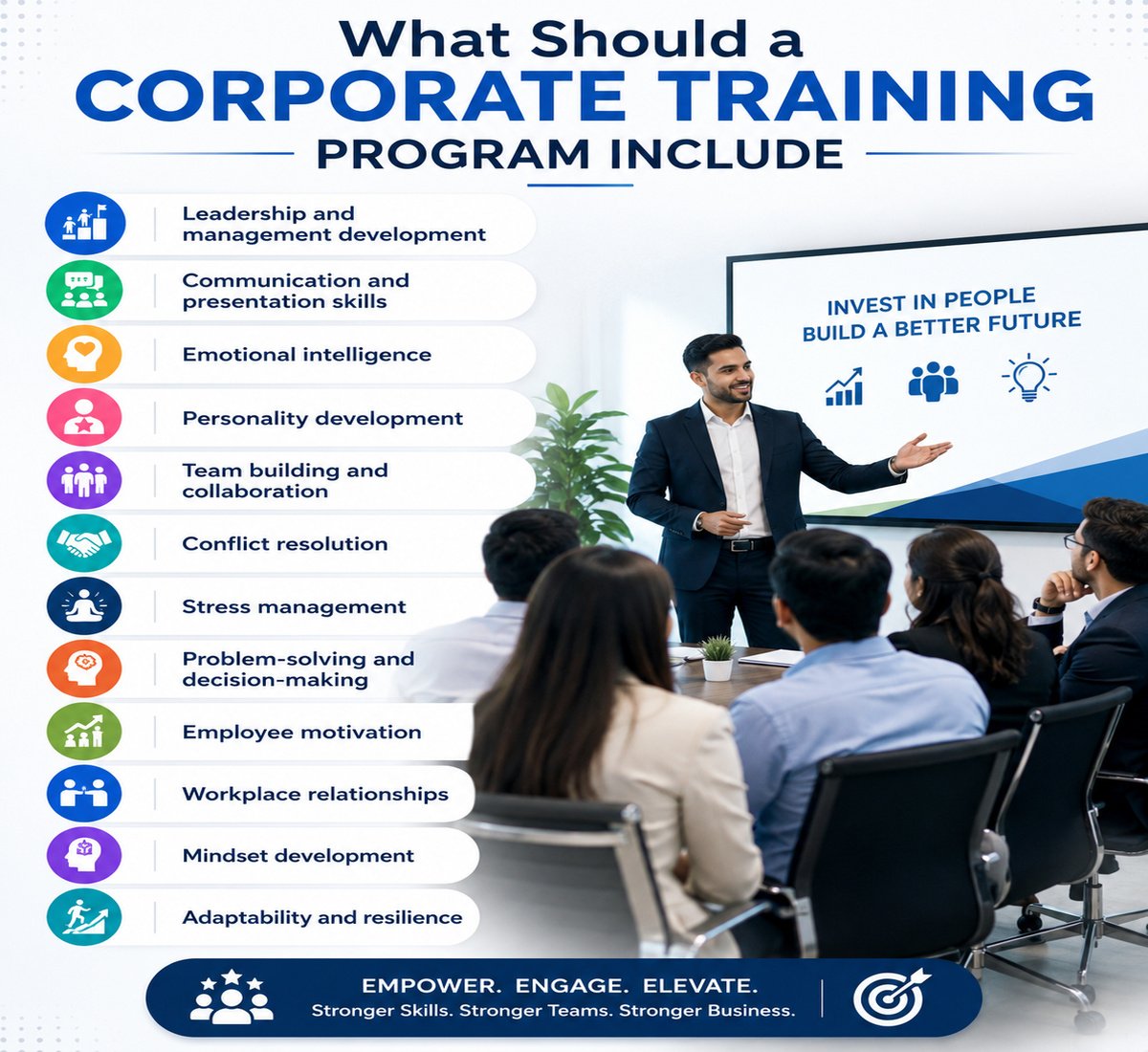
There is no single training model that works for every organization. The program should be aligned with the company’s objectives, employee requirements, industry, and existing workplace challenges.
Some valuable areas include:
- Leadership and management development
- Communication and presentation skills
- Emotional intelligence
- Personality development
- Team building and collaboration
- Conflict resolution
- Stress management
- Problem-solving and decision-making
- Employee motivation
- Workplace relationships
- Mindset development
- Adaptability and resilience
The Source already offers programs and workshops around areas such as NLP, relationship development, personality development, and personal and professional growth, creating a foundation for a people-focused approach to corporate learning.
How to Make Corporate Training More Effective
Simply conducting a workshop does not guarantee lasting improvement. Employees need opportunities to understand, practice, and apply what they learn.
Training should therefore be interactive rather than completely lecture-based. Discussions, activities, role-playing, real-world scenarios, reflection exercises, and practical challenges can make learning more relevant.
Organizations should also identify clear objectives before the program begins. Instead of setting a vague goal such as improving employees, a company could aim to improve managerial communication, strengthen team collaboration, increase confidence in presentations, or prepare employees for leadership responsibilities.
Following up after the training is equally important. Managers can reinforce new behaviors through regular feedback, discussions, and practical application.
Choose Corporate Training That Creates Lasting Change
The purpose of corporate training should extend beyond completing a workshop or adding another certificate to an employee’s record. The real value lies in what changes afterwards.
When employees communicate better, lead with greater confidence, manage challenges more effectively, and understand themselves and others more deeply, the organization benefits too.
Corporate training, when designed around genuine human development, can become more than a professional learning initiative. It can become a pathway toward stronger individuals, healthier teams, better leaders, and a more empowered organization.
With a people-centered approach to growth and transformation, Maniisha Thakkar and The Source can help organizations invest in one of their most valuable assets: their people.